🎯 New here? BallCaddie matches golfers to the right ball. → Take the 90-second quiz
Back to BlogBest Golf Ball for 95 MPH Swing Speed (Tour Balls Start Working)
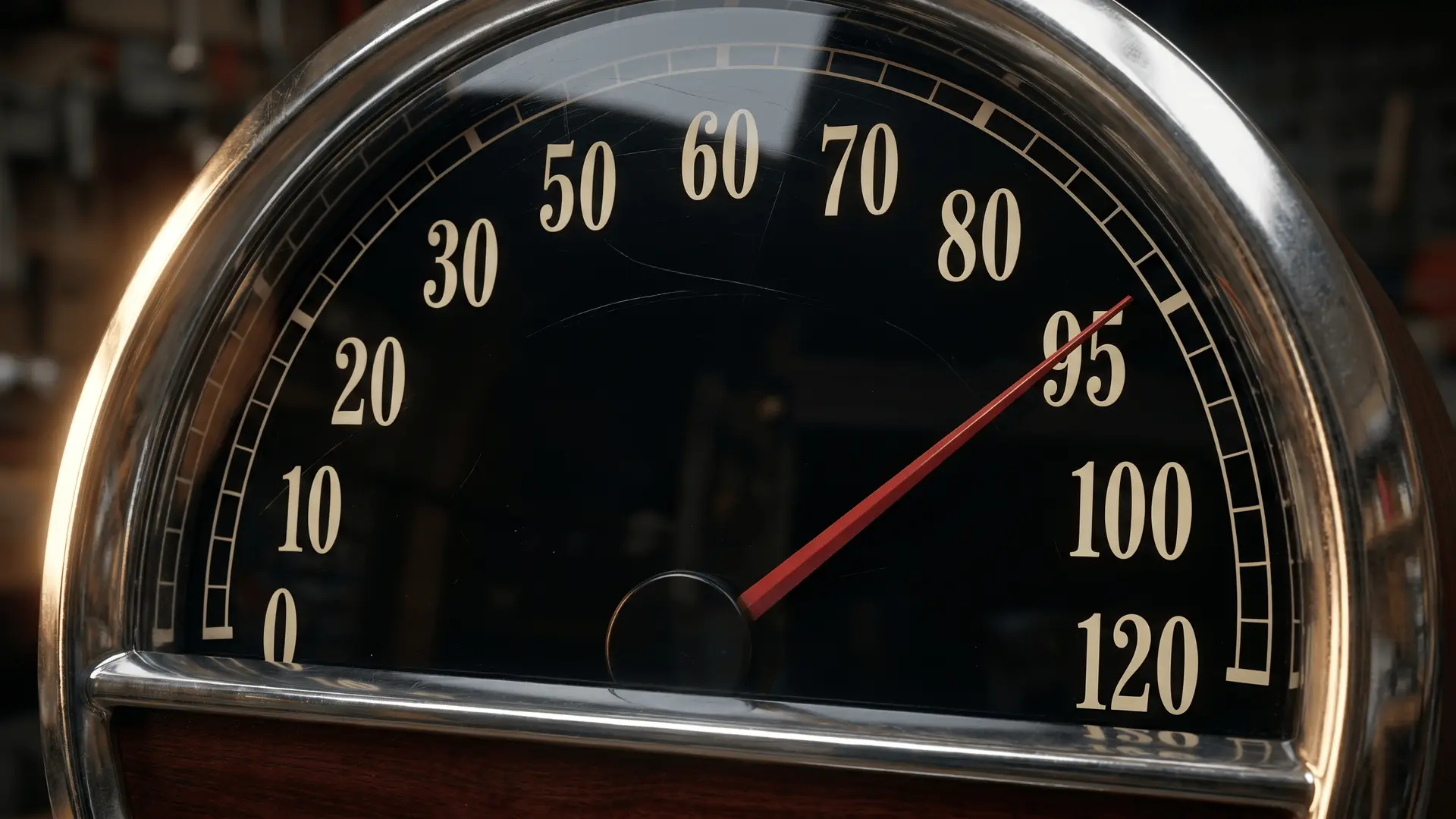
At 95 mph you're squarely in tour-ball territory. Here are the top picks for distance, spin, and feel — plus when to stay in the soft-tour tier vs. move to Pro V1x class.
Answer a few questions about your swing and BallCaddie matches you against a 70+ ball catalog.
Take the 90-second quizQuick answer
At 95 mph the best golf ball is a mid-compression urethane tour ball. Top picks: Titleist Pro V1 (~92, the default premium), Callaway Chrome Soft (~73–78, softer alternative), and TaylorMade TP5 (~93, five-layer). Best value: Srixon Z-Star (~81). Skip firm tour balls (Pro V1x, TP5x) — at 95 mph they’re firmer than you need; save them for 100+ mph.
BallCaddie engine results
Scored across all 72 balls in our catalog for a 95 mph driver swing, a single-digit-to-mid handicap, and a smart-value budget.
Best-fitting balls
| # | Ball | Compression | Cover | ~$/dz | Match |
|---|---|---|---|---|---|
| 1 | Srixon Q-Star Tour | 70 | urethane | $40 | 97% |
| 2 | Titleist Pro V1 | 92 | urethane | $58 | 95% |
| 3 | Bridgestone Tour B XS | 89 | urethane | $55 | 94% |
Smart-value alternative: Kirkland Signature Performance+ ($15), Cut Grey ($25), Wilson Triad ($40).
Top picks for a 95 mph swing speed
| Ball | Compression | Cover | Layers | Price/dozen | Best for |
|---|---|---|---|---|---|
| Titleist Pro V1 | ~92 | Urethane | 3 | $57.99 | Default premium pick, trusted consistency |
| Callaway Chrome Soft | ~73–78 | Urethane | 4 | $55 | Softest feel with tour-level greenside spin |
| TaylorMade TP5 | ~93 | Urethane | 5 | $55 | Most construction layers; Rory McIlroy’s pick |
| Callaway Chrome Tour | ~94 | Urethane | 3 | $58 | Firmer Chrome option, balanced spin profile |
| Srixon Z-Star | ~81 | Urethane | 3 | $54.99 | Best value premium urethane |
| Bridgestone Tour B XS | ~89 | Urethane | 3 | $50 | Reactive iX cover, Tiger Woods’ choice |
| Titleist AVX | ~78–82 | Urethane | 3 | $50 | Low-spin option for ballooning drives / wind |
How 95 mph fits in the swing-speed spectrum
A 95 mph driver swing speed sits right in the activation sweet spot for premium urethane tour balls. TrackMan’s amateur database puts the average male driver swing at 93–94 mph, which means 95 is slightly above average — the swing speed where premium tour balls were engineered to work.
The 95 mph inflection point has two implications:
- Tour balls fully activate. The Pro V1 (~92 compression), TP5 (~93), and Chrome Tour (~94) are all designed for the 88–100 mph activation window. At 95 you’re dead-center. The extra yards and greenside spin pay for the premium price.
- Firm tour balls become plausible but not optimal. The Pro V1x (~102) and TP5x (~97–102) are designed for 100+ mph swings. At 95 you’re on the edge — you can play them, but the softer tier usually feels better and gives up little performance.
The right pick at 95 mph splits roughly down feel and iron-spin preference: softer-and-higher-spinning (Chrome Soft), trusted-middle (Pro V1), or firmer-and-layered (TP5).
The top three picks, explained
1. Titleist Pro V1 — Default premium pick
Compression: ~92 | Cover: Urethane | Layers: 3 | Price: ~$57.99/dozen
The Pro V1 is the most-used ball on the PGA Tour and the most-tested ball in independent labs. At 95 mph it activates fully, returns its designed ball speed, and delivers the consistent launch + spin profile that’s made it the default premium choice for two decades.
Two things make the Pro V1 hard to beat at 95 mph: consistency of manufacture (Titleist’s quality control is rated among the industry’s best in independent ball-to-ball testing) and consistency of flight (the Pro V1 launches and spins predictably across temperatures, altitudes, and courses). For a player who shoots competitive scores across varied conditions, the predictability is worth the premium.
Best for: 88–100 mph swingers who want trusted premium consistency and don’t need ultra-soft feel.
2. Callaway Chrome Soft — Softest tour feel
Compression: ~73–78 | Cover: Urethane | Layers: 4 | Price: ~$55/dozen
The Chrome Soft is the softest four-layer tour ball on the market. At 95 mph it activates fully (it’s designed to activate from 85+ mph) and delivers a noticeably softer feel off both driver and wedges than the Pro V1 or TP5. Phil Mickelson’s ball since 2013.
The four-layer construction is the technical advantage: Callaway uses the extra layer to decouple driver feel (soft) from greenside spin (high). Three-layer tour balls make a tighter trade-off between those two characteristics. If you want soft feel AND high wedge spin without compromise, the Chrome Soft is the cleanest answer.
Best for: 90–100 mph swingers who prioritize feel and short-game check over maximum distance.
3. TaylorMade TP5 — Five-layer tour ball
Compression: ~93 | Cover: Urethane | Layers: 5 | Price: ~$55/dozen
The TP5 uses more construction layers than any other mainstream tour ball — five, vs. three for the Pro V1 and Chrome Tour. Those extra layers give TaylorMade more tuning levers: a soft core for driver feel, progressively firmer mantle layers for iron performance, and a soft urethane cover for greenside spin. Rory McIlroy’s ball since 2017.
At 95 mph the TP5 plays slightly firmer than the Pro V1 (despite similar compression numbers) because of the layer stack. Iron shots stop more predictably on mid-iron approaches — a meaningful advantage for players who score through the irons. See Pro V1 vs TP5 for a full head-to-head on construction, spin, and trajectory at this speed.
Best for: 90–100 mph swingers who want the deepest construction and firmer iron spin.
The value pick
Srixon Z-Star — Best value premium urethane
Compression: ~81 | Cover: Urethane | Layers: 3 | Price: ~$43/dozen
The Z-Star is the most honest value in the premium tour category. At $54.99/dozen it’s $3 less than the Pro V1 and TP5, with performance measured within 1–2 yards of all of them on driver distance and within 300 RPM on full wedge spin in independent testing. For a 95 mph swinger comfortable trading the premium-brand cachet for premium-level performance, it’s a smart pick. See Srixon Z-Star vs Pro V1 for the full 2025 head-to-head with MyGolfSpy robot data.
Best for: Budget-conscious 95 mph swingers who want tour-level performance at 25% less cost.
The low-spin exception
Titleist AVX — For ballooning drives or wind-prone courses
Compression: ~78–82 | Cover: Urethane | Layers: 3 | Price: ~$50/dozen
The AVX is Titleist’s low-spin, low-launch answer for players who spin the ball too much off the driver or play in steady wind. At 95 mph with average swing mechanics, you don’t need the AVX. But if you balloon drives (3,000+ RPM at 95 mph), lose carry distance to wind regularly, or want penetrating flight on windier courses, the AVX is the Titleist option — urethane greenside spin, lower driver spin.
Best for: 95 mph swingers with ballooning drives or wind-heavy home courses.
What 95 mph players get wrong
Playing the Pro V1x because “faster swingers play firmer balls.” Not at 95 mph. The Pro V1x (~102 compression) is designed for 100+ mph swings. At 95, you’ll feel the firmness without gaining ball speed. Default to Pro V1 (~92), and only move up if you already hit low iron shots that need more spin.
Switching balls round to round. Consistency is most valuable at the swing speed where tour balls start paying off. Pick one of the top three (Pro V1, Chrome Soft, TP5), play it for a full season, learn its greenside characteristics, and only switch when you have real on-course data showing it’s a bad fit.
Ignoring iron spin profile. At 95 mph, iron spin starts mattering. The Pro V1 produces moderate iron spin; the TP5x and Pro V1x produce more; the Chrome Soft produces slightly less. If your iron shots hit the green and roll out, you want more iron spin (TP5x territory). If they balloon, you want less (AVX). Most 95 mph players are in the Pro V1/TP5/Chrome Tour sweet spot.
Playing a cold ball. MyGolfSpy froze balls for six hours and measured a compression shift of only 2 to 3 points, yet those balls lost more than 6 mph of ball speed and over 21 yards of carry and total. Cold air takes another 1 to 2 yards per 10°F from every model. At 95 mph, keep your Pro V1 and keep it warm — store sleeves indoors and rotate two through a warm pocket — because Titleist calls the winter switch to a lower-compression ball a common misconception.
The next step
Take the BallCaddie fitting quiz — it scores all 70+ balls in the catalog against your 95 mph profile, short-game priority, trajectory preference, and budget. Ninety seconds.
Key takeaways
- 95 mph sits in the activation sweet spot for premium urethane tour balls (Pro V1, Chrome Tour, TP5, Chrome Soft).
- Top picks: Titleist Pro V1 (default premium), Callaway Chrome Soft (softest feel), TaylorMade TP5 (five-layer).
- Best value: Srixon Z-Star delivers premium performance at 25% less cost.
- Skip firm tour balls (Pro V1x, TP5x) unless you’re specifically chasing more iron spin — they’re designed for 100+ mph.
- Low-spin exception: Titleist AVX for ballooning drives or wind-heavy courses.
- Parent pillar: how to choose a golf ball for your swing speed. Compression reference: complete compression chart.
Stop guessing your golf ball
Take the 90-second fitting quiz · matched from a 70+ ball catalog · sign up to see your match
Take the quiz →Related posts
How online golf ball fitting works: what brand selectors and neutral fitters ask, where a questionnaire beats a launch monitor, and how to answer it right.
The best golf ball for you comes from your swing speed, short game, and budget. Match yourself to one of five player profiles and get the balls that fit.
Answer five questions — swing speed, short game, miss, weather, budget — and the right golf ball falls out. The decision framework, with 2026 robot-test data.
How golf ball fitting works: the green-to-tee method pro fitters use, the swing speed and cover-material data behind it, and how to fit your own ball.
Frequently asked questions
- What's the best golf ball for a 95 mph swing speed?
- At 95 mph the best overall pick is a mid-compression urethane tour ball in the 77–93 compression range. The Titleist Pro V1 (~92) is the default premium choice; the Callaway Chrome Soft (~73–78) is the softer-feeling alternative; the TaylorMade TP5 (~93) is the five-layer tour option. Best value: Srixon Z-Star (~81) at roughly 25% below premium pricing.
- Should a 95 mph swinger play Pro V1 or Pro V1x?
- Pro V1 at 95 mph, usually. The Pro V1 (~92 compression) fits the 95 mph activation window perfectly. The Pro V1x (~102) is designed for 100+ mph swings — at 95 you'd get a firmer feel without the ball-speed advantage, and you'd give up some iron spin that the Pro V1 handles better. Only move to the Pro V1x if you already hit low iron shots and want more iron spin to help them climb.
- Do tour balls actually matter at 95 mph?
- Yes — this is the swing-speed band where the urethane cover advantage starts paying real dividends. Tour balls generate 8,000+ RPM of wedge spin vs. 5,500–7,500 RPM for ionomer (per MyGolfSpy's 2025 testing data), and 95 mph generates enough clubhead speed that the spin difference shows up as real stopping power on partial wedges and approach shots.
- How much distance does the right ball add at 95 mph?
- Independent robot testing typically shows 3 to 7 yards of driver-carry gain from matching compression correctly at this swing speed — small but meaningful over 18 holes. The bigger gain is short-game control: the roughly 2,000 to 3,500 RPM of extra wedge spin from urethane covers vs. ionomer translates directly to balls checking up on partial shots that would otherwise roll past the flag.
- Is the TP5 or Chrome Tour a better fit at 95 mph than the Pro V1?
- All three are legitimate at 95 mph and within 1–2 yards of each other on driver distance. Feel is the real tiebreaker. The TP5 is the firmest of the three (~85–90, five-layer); the Pro V1 is the middle option (~87–90, three-layer); the Chrome Tour (~94, three-layer) splits the difference. Test a sleeve of each — they perform similarly on paper and differently underfoot.
- Do I need a firm ball for wind at 95 mph?
- Usually yes. In steady 15+ mph winds, lower-spin and firmer balls penetrate wind better — the Titleist AVX (~78–82, low-spin urethane) and Bridgestone Tour B X are the common picks for wind-prone courses at 95 mph. The trade-off is slightly less greenside check, but the wind-hold gains outweigh it on courses where carrying into a breeze is a recurring problem.
Stop guessing your golf ball
Take the 90-second fitting quiz · matched from a 70+ ball catalog · sign up to see your match
Take the quiz →