Srixon Z-Star XV Review (2026): The Tour Ball for 105+ mph Swings
Srixon Z-Star XV review (2026): the 102-compression tour ball built for 105+ mph swings, with MyGolfSpy spin data and the case against the Pro V1x.
Quick answer
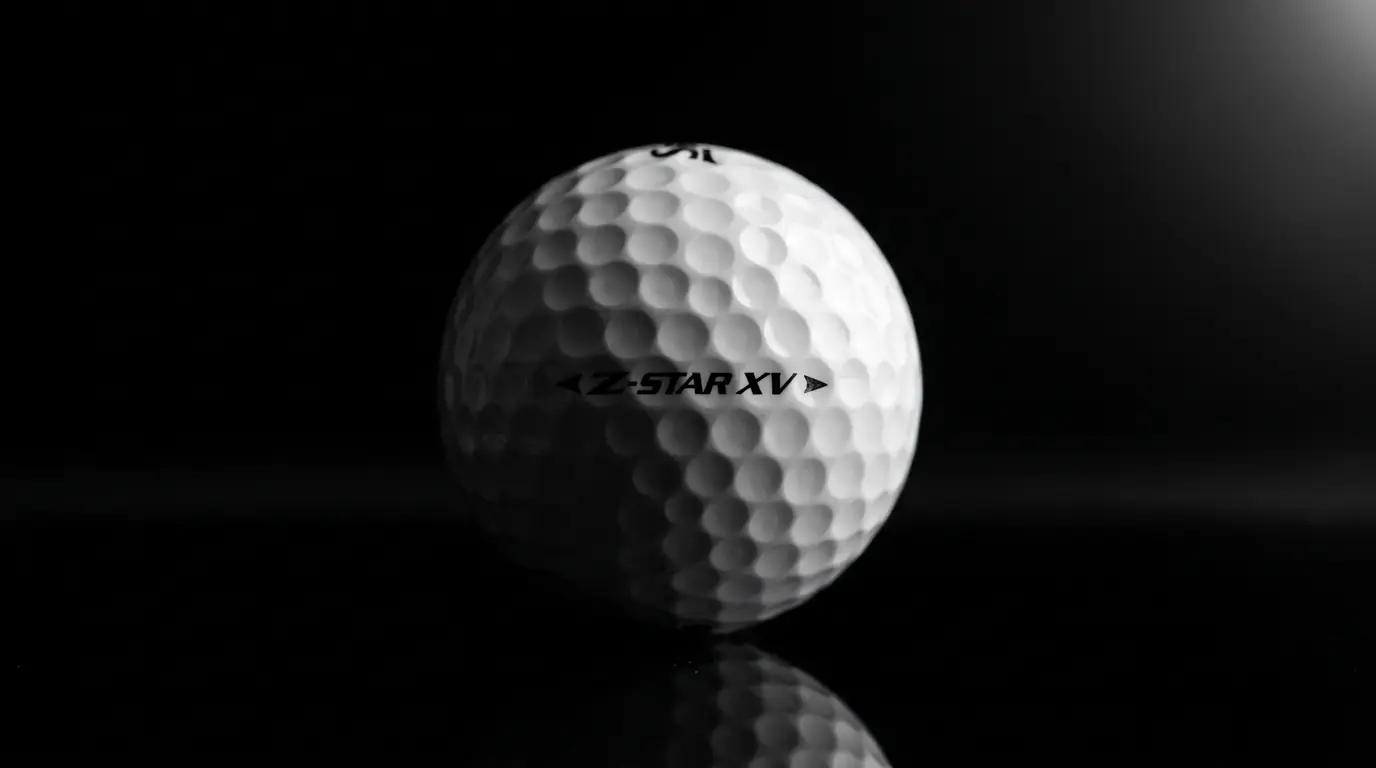
The 2025 Srixon Z-Star XV is a 3-piece urethane tour ball built for swing speeds above 105 mph. Compression sits at 102 — the firmest in the Z-Star line. MSRP is $49.99 per dozen, $5–8 below the Pro V1x, TP5x, and Chrome Tour X. The honest read on the 2025 model: it produces less driver spin than the standard Z-Star but more mid-iron spin, a counterintuitive profile that fits powerful players who want yardage without giving up stopping power.
Spec sheet at a glance
| Spec | Srixon Z-Star XV (2025) |
|---|---|
| MSRP per dozen | $49.99 |
| Promo floor | ~$37.50 (Buy 3 Get 1 Free) |
| Construction | 3-piece |
| Compression | 102 |
| Cover | Bio-urethane (~0.5 mm) + Spin Skin+ coating |
| Core | FastLayer DG Core 2.0 (progressive firmness) |
| Dimples | 338 Speed Dimple Pattern |
| Trajectory | Mid-to-high, penetrating |
| Target swing speed | 105+ mph |
| Colorways | Pure White, Tour Yellow, XV Divide |
| Released | January 24, 2025 |
Specs sourced from Srixon’s official Z-Star XV page and GolfWRX’s 2025 Z-Star launch coverage.
Who the Z-Star XV is built for
Driver swing speed decides whether the XV is in your conversation. Below 95 mph, you won’t compress the 102-rated core enough to see the speed gains it’s engineered to deliver — a softer ball performs measurably better. Between 95 and 105 mph you’re in a gray zone where the standard Srixon Z-Star (~88) is usually the smarter Srixon. Above 105 mph, the XV’s firmer construction is what keeps ball speed from collapsing into the core on every drive.
TrackMan’s amateur data puts the typical male driver swing speed around 93–94 mph. That number says most golfers should be looking at mid-compression balls, not the XV. The XV’s market is genuinely smaller than its sibling’s — the long-hitting amateur, the college player, the tour pro chasing the same compression number their swing already calls for.
What’s actually new in the 2025 model
Three engineering changes define the 2025 Z-Star XV.
FastLayer DG Core 2.0. The dual-gradient core starts soft at the center and stiffens progressively toward the perimeter — three material formulas inside a single core. The XV version adds a firmer band partway through the core compared to the standard Z-Star, which is the headline change responsible for the lower driver spin and higher iron spin combination.
Bio-urethane cover with Spin Skin+. The cover stays at ~0.5 mm but now incorporates plant-derived biomass material that cuts manufacturing carbon emissions without changing the friction profile. The Spin Skin+ coating — a separately applied urethane micro-layer — has been reformulated for 2025 with stronger paint that resists dirt accumulation through a round. Per Srixon’s official spec sheet, both changes target consistent wedge grip late in a round when scuffed covers normally lose grip.
338 Speed Dimple Pattern. Carries over from the prior generation, retuned for the new core to deliver a mid-to-high trajectory that holds line in wind. Golf Monthly’s 2025 testing ranked the XV among the fastest drivers of the year, ahead of the rest of Srixon’s 2025 lineup.
Driver performance
The 2025 MyGolfSpy Ball Test put the Z-Star XV among the longest balls in driver testing — roughly 168–172 mph of ball speed at 110–115 mph swing speeds. Driver spin at 115 mph sat in the 2,300–2,500 RPM range, about 300–400 RPM less than the standard Z-Star under identical robot conditions.
Two things matter about those numbers. The spin reduction is intentional — high-swing players who balloon spin off the driver lose carry to a too-soft ball. And the launch angle on the XV runs about half a degree higher than the standard Z-Star, so the lower spin doesn’t translate to a knock-down trajectory. Per Golf Monthly, the XV’s carry landed “equal to the new Z-Star Diamond ball but on a slightly higher flight.”
Compared to the Titleist Pro V1x (~97) at the same swing speed, MyGolfSpy’s robot data shows the XV producing about 1–2 mph more ball speed but slightly less directional stability in crosswinds — the Pro V1x’s higher base spin does the stabilization work there. Against the TaylorMade TP5x (~97), the XV gains roughly 1.5 mph of ball speed at equivalent launch conditions. Against the Callaway Chrome Tour X (~98), totals land near-identical — the XV flies a touch higher with marginally more spin while the Chrome Tour X runs a flatter, more penetrating window.
The iron-spin paradox
This is where the XV stops behaving like a distance ball.
A firmer construction should produce less spin across the board — that’s been the rule of golf ball design for decades. The Z-Star XV breaks it. MyGolfSpy’s 7-iron data puts the XV at roughly 5,500 RPM at 90 mph clubhead speed — about 300 RPM more spin than the softer standard Z-Star.
The mechanism comes from the FastLayer DG Core 2.0. With a driver, where impact is shallow and near the equator, the soft center absorbs energy efficiently while the firm outer layers minimize the deformation that would spike spin. With irons, where the angle of attack is steeper and the ball compresses more deeply against the clubface, the steeper impact engages the progressively firming outer core — and that core’s return to shape on release adds rotational energy. Different impact geometry, different layer of the core doing the work.
Wedge performance follows the same pattern. Golf Monthly’s testing measured ~10,900 RPM on a full sand wedge — only ~300 RPM behind the Z-Star Diamond (Srixon’s max-spin ball) and meaningfully ahead of the standard Z-Star. From 30 yards, the XV generates roughly 8,200 RPM — enough one-hop-stop spin on firm greens that a powerful player isn’t trading scoring control for the distance gains. The GolfWRX framing fits: the XV “boosts ball speed for greater distance and improved iron spin.”
Z-Star vs Z-Star XV in the same model year
If you’re choosing between Srixon’s two flagship balls, the answer comes down to one number: your driver swing speed.
| Comparison axis | Srixon Z-Star (~88) | Srixon Z-Star XV (~102) |
|---|---|---|
| Target swing speed | 95–105 mph | 105+ mph |
| Driver spin at 115 mph | ~2,700 RPM | ~2,400 RPM |
| 7-iron spin at 90 mph | ~5,200 RPM | ~5,500 RPM |
| Full sand wedge spin | ~10,200 RPM | ~10,900 RPM |
| Trajectory | Lower, more stable in wind | Mid-to-high, more carry |
| MSRP | $49.99 | $49.99 |
The standard Z-Star wins below 105 mph. The XV wins above it. The data showing the XV produces more iron spin despite firmer construction is the surprise — most players assume softer means spinnier across every club, and that intuition fails here. The compression chart tells the same story from a different angle (see the golf ball compression chart for the calibrated-gauge numbers).
For the in-Srixon vs Titleist comparison, the existing Srixon Z-Star vs Pro V1 head-to-head covers the 95–105 mph band against the standard Z-Star. The XV equivalent in Titleist’s lineup is the Pro V1x at $57.99 — an $8 MSRP gap, same as the standard tier.
How it stacks against the 105+ mph field
Seven tour balls share the high-swing-speed bracket. Here’s the price-and-spec frame:
| Ball | Compression | Layers | MSRP | Notable difference |
|---|---|---|---|---|
| Srixon Z-Star XV | 102 | 3 | $49.99 | Lowest driver spin in class, surprising iron spin |
| Titleist Pro V1x | 97 | 4 | $57.99 | Highest greenside feel, best directional stability |
| Titleist Pro V1x Left Dash | 100 | 4 | $57.99 | Tour-only low-spin variant; firmer feel than standard V1x |
| TaylorMade TP5x | 97 | 5 | $54.99 | Five-layer construction, highest launch in class |
| Callaway Chrome Tour X | 98 | 4 | $54.99 | Flattest trajectory, best wind performer |
| Bridgestone Tour B X | 96 | 3 | $54.99 | Closest to XV on driver feel; lower iron spin |
| Mizuno RB Tour X | 95 | 3 | $42.99 | Cheaper alternative, less tour validation |
Three patterns out of this table.
The XV is the highest-compression option in the bracket. That’s a feature for players above 110 mph who actively want to keep ball speed from sinking into the core. It’s a drawback for players closer to 100 mph who’d benefit from the slightly softer compression of the Pro V1x or TP5x.
The price gap matters at scale. At MSRP, you save $5–8 per dozen vs the four Titleist/TaylorMade/Callaway/Bridgestone options. Across 8 dozen a season — fair pace for a competitive player — that’s $40–$64 a year. Add Srixon’s recurring Buy 3 Get 1 Free promo, which drops the effective per-dozen cost to roughly $37.50, and the season gap widens past $140. Titleist does not run manufacturer-sponsored Pro V1x discounts.
The XV’s iron-spin number is a genuine outlier. Most 100+ compression tour balls produce less iron spin than their softer siblings — that’s the conventional design rule. The Z-Star XV is the exception. Whether that matters depends on whether your iron play needs more stopping power on firm greens.
Tour validation
Hideki Matsuyama plays the Z-Star XV. He kicked off the 2025 PGA Tour season at the Sentry Tournament of Champions with a Tour 72-hole scoring record — 35-under, 257 — playing the new XV. Matsuyama’s profile is the textbook XV fit: high swing speed, aggressive iron player, demands tour-level wedge spin.
Srixon’s broader tour board includes Shane Lowry, Brooks Koepka, Keegan Bradley, and Sepp Straka, though those players cycle between the standard Z-Star, the XV, and Signature Series variants depending on their swing-speed profile. Titleist still leads tour usage by a wide margin — roughly 70% of the PGA Tour field — but Srixon’s high-end share has grown every year since 2022.
Buy it if / skip it if
Buy it if:
- Your driver swing speed sits above 105 mph and you compress firm balls efficiently
- You want lower driver spin without sacrificing iron-spin stopping power on approach shots
- You watch promotional cycles — the B3G1 promo turns the XV into a ~$37.50 ball
- You play firm greens that punish low-spin approach shots
Skip it if:
- Your swing speed is below 100 mph — the standard Srixon Z-Star (~88) gives you more carry because you’ll actually compress it
- You play below 50°F regularly — a 102-compression ball plays harsher in the cold; Srixon’s spec sheet flags it as not cold-weather-suitable
- Long-putt feel decides your putter confidence — the Titleist Pro V1x (~97) is softer off the face on long lags
- You’re prone to slicing — the XV’s lower driver spin produces less side-spin recovery; a higher-spin ball can mask a swing flaw better
Price and the seasonal promo cycle
MSRP for the Z-Star XV holds at $49.99 per dozen in 2025 and stays consistent into 2026, mirroring the standard Z-Star’s pricing. Online retailers typically run $44.99–$47.99 year-round — a routine 5–10% discount.
The real bargain is Srixon’s Buy 3 Get 1 Free promo, which runs roughly three to four times a year — usually around Father’s Day, major championship weeks, and end of season. Four dozen at the three-dozen price puts the effective per-dozen cost at about $37.50, a 25% discount.
The Titleist Pro V1x follows a different pattern. Titleist enforces strict MSRP discipline — independent retailers occasionally clear last-generation Pro V1x stock at modest discounts, but the current model holds within a dollar or two of $57.99 year-round.
For an 8-dozen-per-season player, the season-long price gap between the Z-Star XV (at promo) and the Pro V1x (at MSRP) is roughly $164. That’s a real number, not a “save 10%” rounding line.
The next step
If you haven’t measured your driver swing speed on a launch monitor in the last 12 months, do that before buying any premium ball — the XV’s value depends entirely on being inside its 105+ mph bracket. Run your numbers through the BallCaddie fitting quiz and we’ll score the XV against the rest of the 79-ball catalog using your actual swing data. Two minutes, no affiliate tilt.
For deeper dives:
- How to choose a golf ball by swing speed — the pillar guide that maps swing speed to compression tier.
- Srixon Z-Star vs Pro V1 — the in-Srixon vs Titleist comparison at the 95–105 mph tier; the XV’s softer sibling.
- Best golf ball for 100 mph swing speed — where the XV’s swing-speed bracket starts, with the data on when to step up.
- Pro V1 vs Pro V1x — the Titleist comparison most XV shoppers run in parallel.
- Golf ball compression chart — where the 102 number actually lands on a calibrated gauge.
- Best low-spin golf ball — the XV’s strongest claim is driver-spin reduction; this is the broader category context.
- Jordan Spieth’s Pro V1x Left Dash switch — the case study for why spin needs change with swing speed.
Key takeaways
- 102 compression, 3-piece urethane, $49.99 MSRP. Built specifically for swing speeds above 105 mph; below 95 mph, the standard Z-Star is the smarter Srixon.
- Lower driver spin, higher iron spin. The 2025 model produces roughly 300–400 RPM less driver spin than the standard Z-Star but ~300 RPM more 7-iron spin — counterintuitive for a firmer ball.
- MyGolfSpy ranks it among the longest balls in 2025 testing. Ball speeds of 168–172 mph at 110–115 mph swing speeds, with a mid-to-high launch window.
- $8 per dozen cheaper than the Pro V1x at MSRP, ~$20 cheaper at promo. Srixon’s Buy 3 Get 1 Free promo drops the effective price to ~$37.50 per dozen.
- Tour validation: Hideki Matsuyama broke the PGA Tour 72-hole scoring record (35-under, Sentry 2025) on the new Z-Star XV.
Frequently asked questions
What swing speed is the Srixon Z-Star XV designed for?
The 2025 Z-Star XV is engineered for driver swing speeds above 105 mph. Its 102 compression rating sits at the firm end of Srixon’s lineup, meaning slower swings won’t fully activate the core and will lose ball speed compared to a softer alternative. Between 95 and 105 mph, the standard Srixon Z-Star (~88 compression) is usually the better fit. Below 95 mph, neither is the right pick — a mid- or low-compression ball will play measurably longer.
What’s the difference between the Srixon Z-Star and the Z-Star XV?
Compression is the headline gap — 88 vs 102, a 14-point difference. The XV uses the same FastLayer DG Core 2.0 architecture but with added firmness partway through the core, which produces lower driver spin (~2,400 RPM at 115 mph) and a mid-to-high trajectory. Surprisingly, MyGolfSpy testing shows the XV generates roughly 300 RPM more 7-iron spin than the softer Z-Star despite the firmer build — a counterintuitive result driven by the progressive core’s interaction with steep iron impact angles.
Does the Srixon Z-Star XV have high greenside spin?
Yes. Golf Monthly’s 2025 testing recorded about 10,900 RPM on full sand wedge shots, only ~300 RPM behind the Z-Star Diamond (Srixon’s max-spin ball) and meaningfully ahead of the standard Z-Star. From 30 yards, the XV generates roughly 8,200 RPM — enough one-hop-stop spin on firm greens that a powerful player isn’t trading away scoring control for the driver-distance gains. The bio-urethane cover and Spin Skin+ coating maintain friction through full rounds.
Is the Pro V1x worth the extra $8 over the Z-Star XV?
It depends on your priorities. At MSRP — $57.99 vs $49.99 — the Pro V1x buys you slightly better directional stability in crosswinds, softer long-putt feel, and Titleist’s brand consistency across product generations. The Z-Star XV wins on raw ball speed (about 1–2 mph more at 115 mph swing), lower driver spin, and higher iron spin. Factor in Srixon’s Buy 3 Get 1 Free promo (effective ~$37.50 per dozen) and the price gap widens past $20 — at which point most players who fit both balls choose the XV.
Who plays the Srixon Z-Star XV on the PGA Tour?
Hideki Matsuyama is the most prominent current XV user. He opened the 2025 PGA Tour season at the Sentry Tournament of Champions with a Tour 72-hole scoring record — 35-under, 257 — playing the new Z-Star XV. Srixon’s tour board also includes Shane Lowry, Brooks Koepka, Keegan Bradley, and Sepp Straka, though those players cycle between the standard Z-Star, the XV, and Signature Series variants depending on swing-speed profile.
How much does the Srixon Z-Star XV cost?
MSRP is $49.99 per dozen, holding steady from the January 2025 release through 2026. Online retailers typically run $44.99–$47.99 year-round. The real value sits in Srixon’s Buy 3 Get 1 Free promo, which runs roughly three to four times a year and drops the effective per-dozen cost to about $37.50. The Titleist Pro V1x ($57.99) sits $8 higher, and the TaylorMade TP5x ($54.99) and Callaway Chrome Tour X ($54.99) $5 higher, without comparable manufacturer-sponsored promotions.