The golf ball aisle, audited by a robot
You're paying an ego tax on every dozen.
One robot. 48 balls. Identical swings. A $1.25 Costco ball out-spun the premium shelf. Price was never the fitting.
90 seconds. Every ball scored against your swing. A higher price never buys a better score.
BALLCADDIE PRICE AUDIT
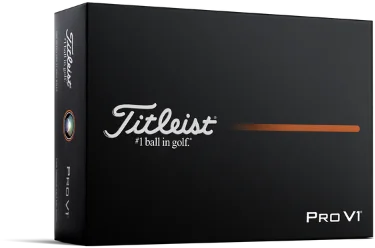 Titleist Pro V1$4.83/ball
built for mid-to-high swing speeds
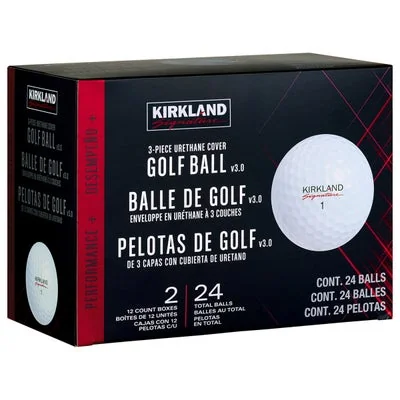 Kirkland Perf.+ (yellow)$1.25/ball
top-5 of 48 for full-swing spin
 Snell Prime 2.0$1.58/ball
wedge spin about 74 rpm off a Pro V1*
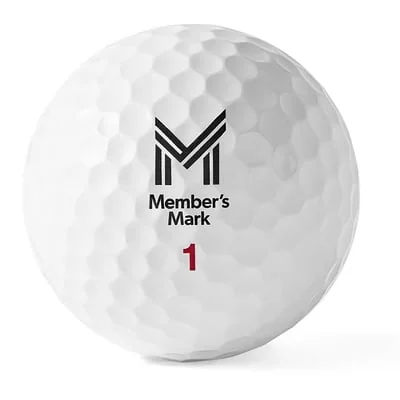 Member's Mark Tour$1.25/ball
cheapest urethane cover in golf
EGO TAX = what you pay minus what your swing collects
* Today's Golfer 2024 robot test. Prices are current MSRPs.
The Pro V1 is a great ball. That was never the question.
The Titleist Pro V1 is a 92-compression tour ball built for mid-to-high swing speeds, and at those speeds it has earned every trophy on its shelf. The question is whether your swing is the one it was built for.
A compression-92 ball pays out to swings fast enough to load it. Swing fast enough and the core compresses, springs back, and hands you its speed. Below that speed the spring never fully loads, and the premium you paid stays in the ball.
Tour players get theirs free. Most are paid to play them. You pay $4.83 a ball to copy a fitting that was done for someone with a swing you don't have.
The ego tax is the gap between what the ball costs and what your swing can collect from it.
What the robot found when nobody could see the price tags
A swing robot doesn't know what a ball costs. Same club, same speed, all 48 balls. Some of what it measured:
$1.25 per ball
Kirkland Signature Performance+ V3.0 (yellow)
Top-5 in the 48-ball field for full-swing spin, at $29.99 for two dozen in the warehouse. The white version comes off a different factory line and ran 10+ spots lower. The robot caught the difference between colors.
$18.99 per dozen
Snell Prime 2.0
One of the very few two-piece balls with a real urethane cover, with wedge spin within about 74 rpm of a Pro V1 in Today's Golfer's 2024 robot test. It's built for 7-iron carries of 125 yards or less: a tour-caliber short game engineered for a normal swing speed.
$14.99 per dozen
Member's Mark Tour
A real three-piece urethane tour ball at the lowest urethane price in golf. The cover material on a $58 ball, for a quarter of the money.
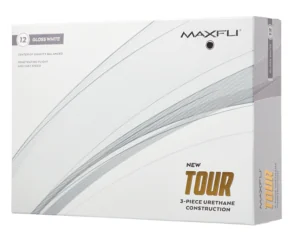
$39.99 per dozen
Maxfli Tour
94 compression, cast urethane, Pro V1-comparable performance at a $18 discount. This receipt stings if you’re a fast-swing player who assumed only the $58 dozen could keep up.
Price measures the marketing budget. The robot measures the ball.
The tax doesn't stop at the register
Water down the left, $4.83 in your hand. You steer it. The expensive ball changes how you swing before it ever changes your score.
Lose 3 balls in a round (everyone has) and that's $14.49 gone before you count a stroke. So you play the scuffed one an extra 9 holes instead.
And you already know the tell: you've found a Kirkland in the rough, played it, and couldn't feel the difference. Then you bought Pro V1s again anyway.
The tax runs the other way too. A fast swing on a soft $22 distance ball balloons wedges and gives up the exact greenside control it paid nothing for. Same tax, opposite direction, because the price tag picked the ball and nothing else did.
The only honest way to buy a ball
Price-Blind Fitting
Price-blind fitting means a higher price can never earn a golf ball a better score. Every ball is scored on what it does for your swing, and your budget only ever tilts the result toward cheaper dozens — never pricier ones.
Strip the price tag off and fit the ball the way a tour van would:
COMPRESSION AND SWING SPEED
So the ball loads and pays out its speed to your swing, whatever it costs.
SPIN AND YOUR MISS
Less driver spin if you're fighting a slice, more spin if greens won't hold your approach.
COVER AND YOUR SCORING SHOTS
Urethane checks, ionomer releases, and cover material no longer tracks price.
A $19 ball can outrank a $55 ball. On the robot, it already has.
Think about who else could offer you this. Ball makers profit most on the premium shelf. Retailers stock by margin. Tour pros are sponsored. Every voice in golf gets paid more when you buy the expensive dozen, whether or not it fits you.
A price-blind fitting is the one thing the golf ball industry can't sell you. It took a company that doesn't sell golf balls.
Your Ball Fitting Report: the fit first, the price after
Answer 90 seconds of questions about your game: driver distance, typical miss, feel, budget. The fitting engine scores 72 balls from 19 brands against your swing, with the 2026 robot-test data built in — and a price tag never earns a ball a point.
The quiz and your six-section Fitting Report are free. The report shows what your swing needs and what got ruled out. Unlocking your named ball match, the reasoning, and the closest alternates at your price is one payment that costs less than a single dozen of the ball it's auditing.
If your match costs less than what you play now
The unlock pays for itself the first time you buy balls, and every dozen after that is a refund.
If your match is the premium ball you already play
Then the $58 was never a tax. It was a fit. Now you know, and you never second-guess it at the register again.
Take the 90-second quiz
Things you already know: driver distance, your miss, how you like a ball to feel. No launch monitor.
The engine fits you price-blind
72 balls scored on compression, spin and cover against your swing. A higher price never earns a ball a single point — your budget can only tilt the fit toward cheaper dozens.
Get your Fitting Report
Your report is free. Sign up to see it; unlocking your named ball and alternates is one payment.
Golfers who stopped paying it
“I was a Pro V1 guy for 8 years. BallCaddie matched me to a ball I’d never even tried. Lost 3.3 strokes off my handicap in one season.”
“The Caddie Mode test was the eye-opener. I watched my ‘favorite’ ball lose 4 holes in a row to one I’d written off. Switched that day.”
“Worth every penny just for the spin breakdown. I finally understand why my wedge shots were releasing too much.”
Early-user results. Individual results vary.
Frequently asked questions
Are expensive golf balls worth it?
At the swing speeds they’re built for, premium tour balls led plenty of the 2026 robot test. The question is whether your swing collects what you’re paying for. The fitting answers that. Sometimes the answer is "keep the Pro V1."
Won't a cheap ball wreck my short game?
Cover material decides that, and it no longer tracks price. Snell’s $18.99 ball and the $14.99 Member’s Mark Tour both have the same urethane cover class as the $58 dozen. The report weighs your scoring shots when it picks your cover.
I can afford the premium ball. Why bother with a fitting?
Then buy it, after it wins your fitting. Paying more is fine. Paying more for performance your swing can’t collect is the tax.
What does BallCaddie cost?
The 90-second quiz and your six-section Fitting Report are free. Unlocking your named ball match is a one-time payment that costs less than a dozen premium balls. You see the price after the quiz, so the fitting is done either way.
Do you make money on the balls you recommend?
We don’t sell golf balls. The unlock costs the same whether your match is $14.99 or $57.99, which is the only reason a price-blind fitting is possible.
You'll buy about 3 dozen this season. Find out what they should be.
The robot already stripped the price tags. 90 seconds tells you which ball your swing would pick if the shelf were blank.
72 balls scored price-blind. MGS 2026 robot data. Free report in minutes.