🎯 New here? BallCaddie matches golfers to the right ball. → Take the 90-second quiz
Back to BlogGolf Ball Strokes Saved: How Many Shots Is the Wrong Ball Costing You?
How many strokes the wrong golf ball costs you per round, what the robot-test data actually shows, and how BallCaddie's brand-neutral Strokes Saved Estimate puts a number on it.
Answer a few questions about your swing and BallCaddie matches you against a 70+ ball catalog.
Take the 90-second quizQuick answer
The wrong golf ball costs most amateurs somewhere between a few tenths and two strokes a round, and the biggest lever is greenside spin. Robot testing measures up to 3,300–4,000 rpm of wedge-spin difference between ball models on the same swing, plus roughly 15 yards of driver carry between the best and worst ball at 100 mph. Match compression for distance and cover material for short game, and you claw most of it back. BallCaddie’s Strokes Saved Estimate puts a number on the gap.
Where the strokes hide
| Where strokes leak | What the ball changes | Measured evidence |
|---|---|---|
| Short game (cover material) | Greenside / wedge spin | Urethane spins ~2,000–3,500 rpm more than ionomer; up to ~4,000 rpm between the highest and lowest models |
| Off the tee (compression) | Ball speed and carry | ~15 yds carry / ~20 yds total between the best and worst ball at 100 mph |
| Ball flight (trajectory) | Launch and descent | ~300 rpm less driver spin ≈ 5–6 extra yards, all else equal |
Most golfers pick a ball from a commercial, a sleeve found in the woods, or whatever their favorite pro plays. A major manufacturer’s own survey found that 67% of golfers have never been fit for a ball, even though about 55% of irons and drivers sold to serious players are now custom fit. The ball is the only piece of gear you use on every shot, and it’s the one most amateurs never fit.
What “strokes saved” actually measures
Strokes saved is the estimated scoring difference between the ball you’re playing and the ball that fits your swing, spread across a few places at once. A better ball stops faster on a wedge, flies a touch farther off the tee, and holds a more predictable window in the wind. Those add up.
BallCaddie’s fitting engine models this as a projection across four factors, weighted by where an amateur actually loses shots:
- Short game / cover — the biggest factor, roughly 0.3 to 1.5 strokes, driven by greenside spin.
- Feel and consistency — compression matched to your swing, roughly 0.2 to 0.7 strokes.
- Ball flight — trajectory and descent angle, roughly 0.1 to 0.5 strokes.
- Speed optimization — the ball engineered for your speed band, a smaller bonus.
The engine scales those by handicap. A higher handicapper gets more of the estimate from forgiveness and flight; a lower handicapper gets more from spin control, because they’re sharp enough to use it. The total is a research-calibrated estimate, not a launch-monitor reading, and the app says so on the results screen. Use it to compare balls and see where your strokes live.
Where the wrong ball leaks strokes
Short game: the biggest lever
Cover material is the largest performance variable in ball selection, and it barely touches your driver. On a partial wedge, Golf Laboratories’ robot test of 40 balls found a 3,300 rpm spread between the highest and lowest spinning models on a 50-yard shot, while driver spin stayed tightly grouped. MyGolfSpy’s 2025 testing measured nearly 4,000 rpm between the highest and lowest balls on a 35-yard wedge.
That gap is mostly urethane versus ionomer. A urethane cover generates roughly 2,000–3,500 rpm more wedge spin than an ionomer one on the same swing. On a firm green, that’s the difference between a ball that hops once and grabs and a ball that skips out to the back fringe. If you make consistent contact inside 100 yards, this is where your strokes come from, and it’s why balls like the Callaway Chrome Tour (~94) and the value-priced Kirkland Signature V3 (~95) both run urethane covers.
Off the tee: compression, not cover
Distance comes from compression matched to swing speed, and ball speed is the biggest factor in how far a shot carries. A ball too firm for a slower swing never fully compresses, so it leaves the face slower than it should. MyGolfSpy’s testing found that at a 100 mph swing, the spread between the best and worst ball was 14.79 yards of carry and 20.68 yards of total distance — a bigger range than they measured between modern drivers in four of five metrics.
The common myth is that a premium urethane ball flies farther. It doesn’t, at matched compression. Urethane and ionomer balls land within a few yards of each other off the driver; the perceived distance jump when someone switches to a tour ball is almost always compression matching, not the cover. For faster swings, a firm ball like the Bridgestone Tour B X (~100) or the Mizuno Pro X (~102) keeps ball speed up where a soft ball would bleed it into the core. Our compression chart maps every ball to a swing-speed tier.
Ball flight: spin you didn’t order
The third leak is trajectory. Too much driver spin balloons your flight and dies in the wind; too little and the ball falls out of the sky short. Gene Parente of Golf Laboratories gives the concrete version: drop driver spin from 2,800 to 2,500 rpm by changing balls and “that could potentially get you 5 to 6 yards of distance without doing anything else.” A ball that fits your delivery puts the spin where you want it, which is the whole point of matching a flight profile instead of guessing.
The tour proof: even Spieth carried too much spin
If a 3-time major winner can play too much spin for a year, your odds of a perfect self-fit are slim. In a 190-ball testing session, Jordan Spieth moved from the 2025 Pro V1x to the lower-spinning Pro V1x Left Dash, and Golf Digest reported the result as a 300–500 rpm drop in spin depending on the club. He’d been playing one of the highest-spinning balls on the market because he assumed his long irons needed it. The full breakdown of why his spin needs drifted with his speed is in our Spieth Left Dash case study — the amateur lesson is that a ball fit ages out as your game changes.
How BallCaddie scores it, brand-neutral
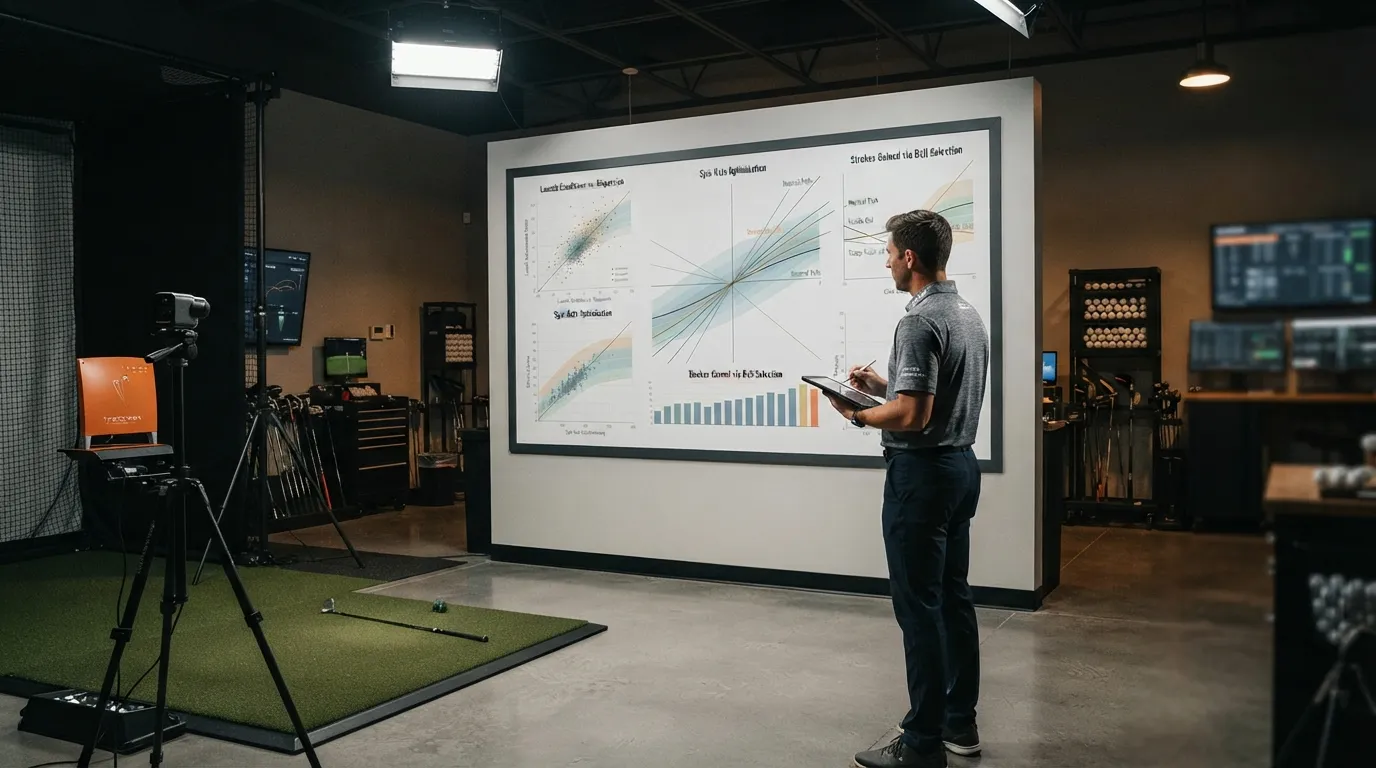
BallCaddie is a brand-neutral fitting tool, and it takes no affiliate payments from ball manufacturers. The recommendations come from data on 70+ balls, refreshed each season as new models ship. The specs behind the scoring come from manufacturer datasheets, the USGA conformance list, and independent robot testing published by MyGolfSpy and the Golf Digest Hot List.
The engine scores each ball across greenside spin, feel, cover material, trajectory, speed tier, and compression, then weights those against your answers on swing speed, typical miss, greenside priority, and budget. It’s a curation of published testing into a per-golfer recommendation, not a live launch-monitor session, which is why it can hand you an honest answer without a $500 fitting bay. For the full method, see our guide on how golf ball fitting works.
Reading your Strokes Saved result
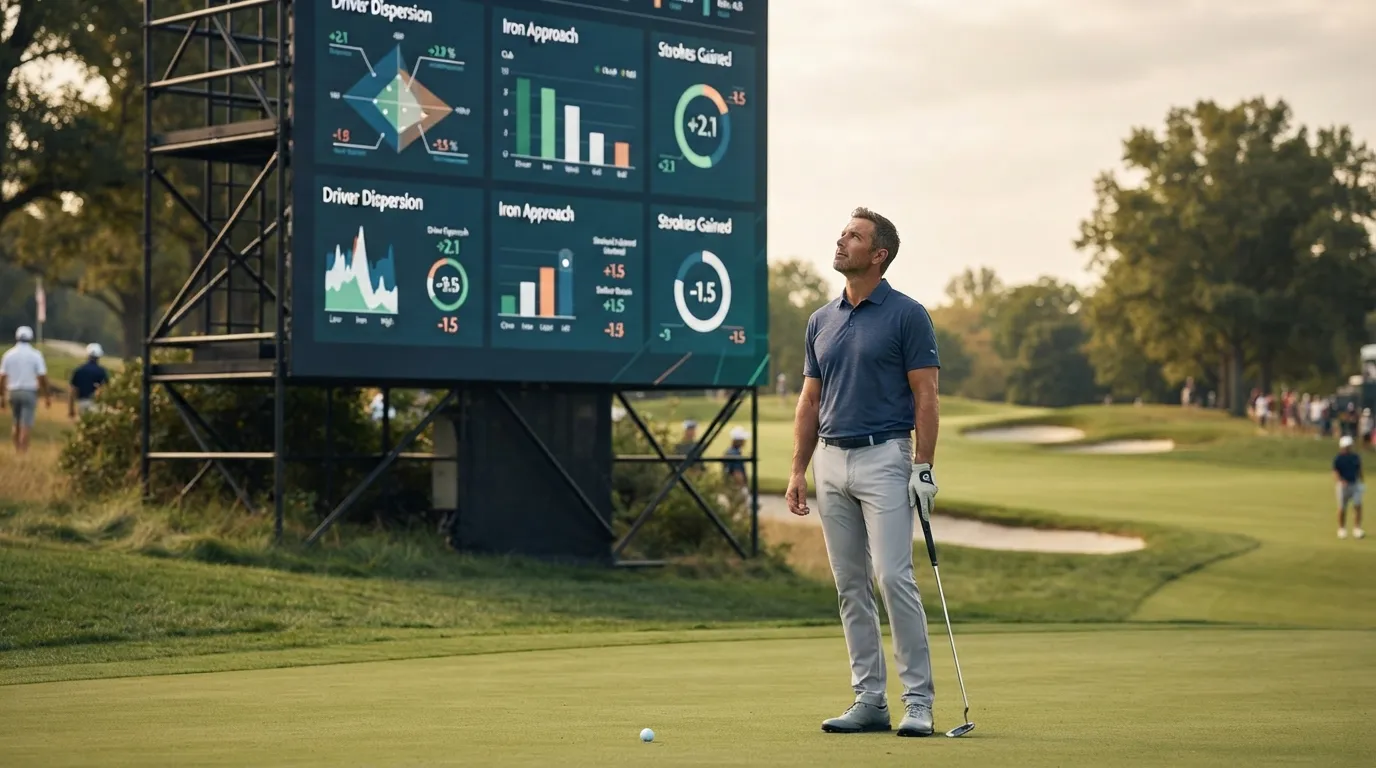
When you finish the quiz, the report shows a Strokes Saved Estimate and a factor-by-factor breakdown. Two things worth reading carefully:
- The total is a projection. It compares your matched ball to an average, unfitted baseline and scales to your handicap. The app labels it as an estimate based on published research, and actual results vary by player. It’s most useful as a relative comparison between two balls you’re weighing.
- The breakdown tells you where the strokes are. If most of your estimate sits under short game, a urethane cover is worth paying for. If most of it sits under feel and flight, you might get the same scoring bump from a cheaper ball at the right compression.
That second point is the whole game. The breakdown shows you which lever moves your score, and it’s often not the most expensive ball on the list.
The mistakes that cost the most strokes
- Playing what your buddy plays. His swing speed and spin profile aren’t yours. A Pro V1 is not universally correct.
- Buying urethane for distance. The cover is a short-game upgrade. If you never spin a wedge, you’re paying $35 a dozen for spin you don’t use.
- Ignoring the cover when you score inside 100 yards. Up-and-downs win more strokes than five yards of carry. If your short game is sharp, weight the cover heavily.
- Never re-fitting. Your swing speed and miss change over years. The ball that fit at a 15 handicap may not fit at an 8, as Spieth’s own switch shows.
Budget vs premium: when the strokes are worth paying for
Frame the buy around where your next ten strokes come from. If that’s greenside, pay for a urethane cover: a consistent short game turns 2,000–3,500 rpm of extra wedge spin into saved strokes. If it’s keeping the ball in play, a well-fit value ball is the better buy, and losing a $15 dozen stings a lot less than a $57 one.
A value-urethane ball like the Kirkland Signature V3 (~$15) gets you most of the way to a $57 tour ball on full swings for about a quarter of the price, which is why it keeps showing up as the honest answer for mid handicappers who lose a few balls a round. Greenside is the exception — MyGolfSpy’s 2026 test measured Kirkland wedge spin down at ionomer level, so if your strokes come from inside 50 yards, cross-shop the Maxfli Tour or Srixon Q-Star Tour instead. Premium tour balls earn their price once your contact is consistent enough to feel the difference.
The next step
This framework narrows the 70+ ball market down to a short list for your swing and your priorities. To put an actual number on it, run your swing through the BallCaddie fitting quiz — swing speed, typical miss, greenside priority, budget — and it scores the whole ball catalog against your profile. Sign up to see your match; the full Strokes Saved Estimate and its factor breakdown are part of BallCaddie Pro. No affiliate tilt, so it’ll tell you when a $17 dozen is the right answer.
Not sure whether your current ball is even the problem? Start with the 10-minute at-home test.
For deeper dives on the inputs this audit pulls from:
- How to choose a golf ball for your swing speed — the pillar guide on matching compression, cover, and construction to your driver speed.
- Urethane vs ionomer covers — the greenside-spin data and when the cover upgrade pays for itself.
- Golf ball compression chart — every ball’s measured compression sorted by swing-speed tier.
- Golf ball fitting: how it works — the green-to-tee method and the four inputs that decide your ball.
- Jordan Spieth played the wrong ball for years — the tour case study on why spin needs drift with your speed.
Key takeaways
- The wrong ball costs most amateurs a few tenths to two strokes a round, concentrated in the short game.
- Greenside spin is the biggest lever — urethane spins ~2,000–3,500 rpm more than ionomer on wedges; up to ~4,000 rpm between the highest and lowest balls.
- Compression drives distance, cover drives short game — at matched compression, urethane and ionomer are within a few yards off the tee.
- Strokes Saved is a projection, calibrated to your handicap and grounded in published testing, best used to compare balls and find where your strokes hide.
- The breakdown matters more than the total — it tells you whether to pay for urethane or bank the savings on a well-fit value ball.
Stop guessing your golf ball
Take the 90-second fitting quiz · matched from a 70+ ball catalog · sign up to see your match
Take the quiz →Related posts
Driver spin and greenside spin are opposite problems. Here are the best high-spin picks for wedges, iron spin control, and when you actually want less spin — not more.
The 7 online golf ball fitting tools worth running in 2026, ranked by brands scored, what they ask past swing speed, and whether the result explains itself.
How online golf ball fitting works: what brand selectors and neutral fitters ask, where a questionnaire beats a launch monitor, and how to answer it right.
The best golf ball for you comes from your swing speed, short game, and budget. Match yourself to one of five player profiles and get the balls that fit.
Frequently asked questions
- How many strokes does the wrong golf ball cost per round?
- For most amateurs it lands between a few tenths of a stroke and roughly two strokes a round, and the biggest single lever is greenside spin. BallCaddie's Strokes Saved Estimate models it as a projection, not a measured result: short-game/cover match carries the most weight (~0.3–1.5 strokes), then compression match (~0.2–0.7) and trajectory (~0.1–0.5), calibrated to your handicap. It's an estimate grounded in published robot testing, so treat it as directional.
- Does the golf ball really matter for high handicappers?
- Yes, though not the way it matters for a tour player. A high handicapper rarely feels 500 rpm of wedge spin, but the ball still shapes flight consistency and dispersion. A lower-spin cover off the driver can tighten a slice enough to keep a ball in play instead of out of bounds, and that swing of one penalty stroke dwarfs any greenside-spin gain. Match forgiveness and flight first, feel second.
- Should I match ball compression to my swing speed?
- Match compression for driver distance, and match cover material for short-game spin. Those are two separate decisions. Compression drives how efficiently your swing speed turns into ball speed, so a ball too firm for a slow swing leaves yards on the tee. Cover material (urethane vs ionomer) drives greenside spin almost independently of the core. Modern robot testing shows compression, not cover, is what moves driver distance.
- Why do some golf balls cost $50 a dozen and others $20?
- The price gap is mostly the cover. Premium balls use a thin cast-urethane shell that grips wedge grooves for high greenside spin; value balls use a firmer ionomer or Surlyn cover that lasts longer but grips less. Independent testing puts urethane at roughly 2,000–3,500 rpm more wedge spin than ionomer on the same swing. Off the driver the two are within a few yards, so you're paying for short-game control, not distance.
- What is BallCaddie's Strokes Saved Estimate and how accurate is it?
- It's a projected per-round figure that compares your recommended ball against an average, unfitted baseline across short game, feel/consistency, and ball flight, then scales the result to your handicap. The number is a research-calibrated estimate, not a launch-monitor measurement, and the app labels it as such: 'estimates based on published research (MyGolfSpy, Golf Digest); actual results vary by player.' Use it to compare balls and understand where your strokes hide, not as a guarantee.
- Is more spin always better?
- No. More greenside spin helps you stop wedges, but more driver spin usually costs distance and can balloon your ball flight into the wind. The goal is spin in the right place: high on the wedges, controlled off the tee. That's why a ball with a firm, low-spin core and a soft, high-spin cover often outscores both a spinny two-way ball and a low-spin distance rock.
Stop guessing your golf ball
Take the 90-second fitting quiz · matched from a 70+ ball catalog · sign up to see your match
Take the quiz →