🎯 New here? BallCaddie matches golfers to the right ball. → Take the 90-second quiz
Back to BlogVice Golf Balls: The Complete Lineup and Buyer's Guide (2026)
Compare all five Vice golf balls by swing speed, spin, and price. Robot-test data, honest fit picks, and why the Pro Plus undercuts a Pro V1x by $16.
Answer a few questions about your swing and BallCaddie matches you against a 70+ ball catalog.
Take the 90-second quizQuick answer
Vice sells five golf balls direct to consumers, and the right one comes down to swing speed and budget. Fast swingers (100+ mph) want the firm Vice Pro Plus; most golfers fit the all-around Vice Pro or the softer, higher-launching Pro Air. The Vice Tour is the value pick, the Vice Drive the cheapest distance ball. All three “Pro” balls wear a tour-grade urethane cover near $40 a dozen, well under the $58 of a Titleist Pro V1.
Vice golf ball lineup at a glance
| Model | Cover | Compression | Spin | Best for | MSRP/dozen |
|---|---|---|---|---|---|
| Vice Pro Plus | Urethane | ~97 (firm) | High | 100+ mph, penetrating flight | $41.99 |
| Vice Pro | Urethane | ~89 (mid-firm) | Mid | 90–105 mph, all-around | $39.99 |
| Vice Pro Air | Urethane | ~72 (mid) | Low | 80–95 mph, high launch | $39.99 |
| Vice Tour | Surlyn | ~98 | Mid | Value, durability | $29.99 |
| Vice Drive | Surlyn | ~95 | Low | Beginners, distance | $19.99 |
Compression and spin tiers are from BallCaddie’s ball catalog; independent labs measure the urethane Pro line in the same brackets, give or take a few points by batch. All three urethane Pro balls deliver tour-level greenside spin off the wedge, while the surlyn Tour and Drive trade that bite for cover durability.
What Vice golf balls actually are
Vice Golf is a direct-to-consumer brand, which is the entire reason the prices look low. Two lawyers founded it in Munich in 2012 and built the company around selling online instead of through pro shops and big-box stores. The balls are made by contract manufacturers in Taiwan, the region that also produces balls for several major labels, while Vice handles the core, mantle, and cover design. Removing the distributor and retailer margins is how a urethane tour ball lands near $40 instead of $58.
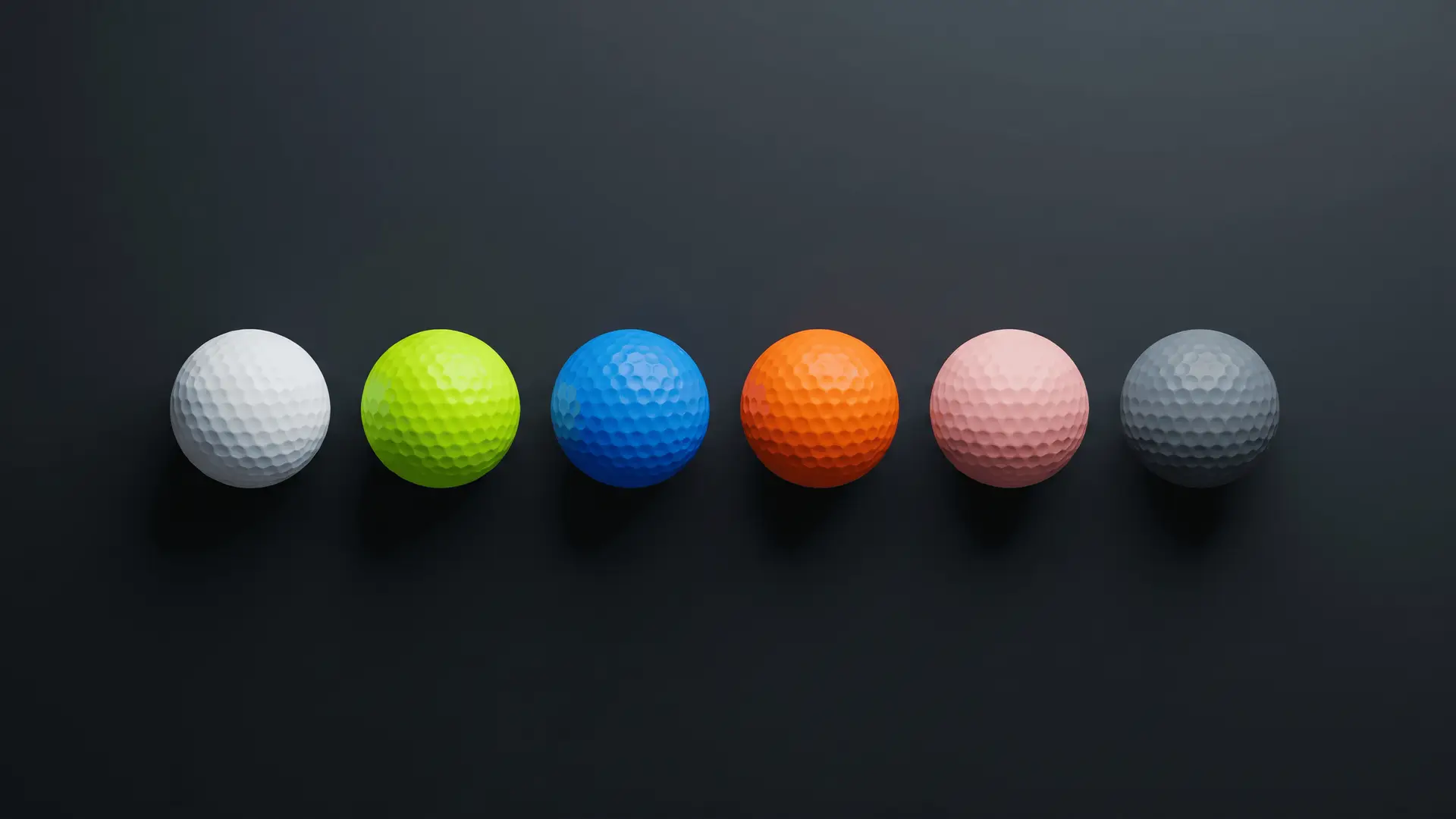
That model has a second payoff. Every ball can be personalized with custom text at little or no extra cost, and Vice leans into matte and neon colorways that legacy brands reserve for premium lines. The trade-off is real: you order online and wait for delivery rather than grab a sleeve at the turn. For golfers who buy by the season, Vice’s tiered bulk pricing leans the other way, dropping the per-dozen cost as the order grows.
How to pick a Vice ball by swing speed
Swing speed is the first filter. It decides which compression actually returns energy at impact, so it sorts the Vice lineup faster than any feel preference does. TrackMan’s amateur data puts the average male driver swing speed near 93 mph and the average woman around 83 mph, which means most golfers belong in the soft-to-mid Vice range, not the firm top end.
- Under 95 mph: the higher-launching Vice Pro Air (~72) compresses easily and holds launch.
- 90–105 mph: the Vice Pro (~89) is the all-around urethane fit for the biggest group of golfers.
- 100+ mph: the firm 4-piece Vice Pro Plus (~97) keeps ball speed up and flattens trajectory.
Don’t know your number? The swing-speed fitting framework covers how to measure it and why the compression match matters more at the extremes than in the 85–100 mph middle where most amateurs live.
The five Vice balls, model by model
Vice Pro Plus — the flagship for fast swings
The Pro Plus is Vice’s firmest ball and the most popular model among its low-handicap players. It’s a 4-piece cast-urethane build around 97 compression with a low, penetrating flight and high greenside spin, which is why it plays closer to the Titleist Pro V1x than the standard Pro V1. Best above 100 mph; under 95 mph you won’t compress the core enough to earn the firmness. At $41.99 a dozen it sits $16 under the $57.99 Pro V1x.
Vice Pro — the all-rounder
The Pro is the versatile 3-piece urethane ball most golfers should start with, rated around 89 compression with a mid trajectory and tour-level greenside bite. It fits the broad 90–105 mph band, flying a touch higher than a Pro V1 with slightly less driver spin in independent testing. If you want one Vice ball that works across the bag without committing to the firm Pro Plus, this is it. Vice’s product page lists it as Ranked Gold by Golf Digest. The full head-to-head lives in Vice Pro Plus vs Pro V1.
Vice Pro Air — high launch, light feel
The Pro Air is a lightweight 3-piece urethane ball built to get the ball up, rated around 72 compression with a high trajectory. It suits moderate swing speeds (roughly 80–95 mph) that struggle to launch a firmer ball, and it holds feel better than the Pro family in cooler weather. You keep the urethane greenside spin while gaining carry from the higher flight. Vice discontinued the softer Pro Soft and now points slower-swing and soft-feel buyers to the Pro Air, which its product page lists as Ranked Gold by Golf Digest.
Vice Tour — the value pick
The Tour is a 3-piece ball with a durable surlyn cover at $29.99 a dozen, and it’s the one most reviewers single out as Vice’s value sweet spot. The surlyn cover trades some greenside bite for toughness and distance, so it shrugs off cart paths and wedge grooves where the urethane balls scuff. If you lose or retire several balls a round, the math here beats paying urethane prices. The urethane vs ionomer breakdown explains exactly what the cover swap costs you around the green.
Vice Drive — the cheapest distance ball
The Drive is a 2-piece surlyn distance ball at $19.99 a dozen, the lowest price in the line and the simplest construction. It runs low spin and a high launch for forgiveness off the tee, which suits beginners and high-handicappers who want carry and roll over greenside control. It’s a backup or starter ball rather than a long-term gamer for players who score on their short game.
Vice vs Titleist Pro V1: what the robot data shows
The Vice Pro Plus competes with the Titleist Pro V1x (~102), not the standard Titleist Pro V1 (~92), because both are firm 4-piece balls. In MyGolfSpy’s robot testing the two land remarkably close, with the gap showing up in spin more than distance.
| Metric (MyGolfSpy robot) | Vice Pro Plus | Titleist Pro V1x |
|---|---|---|
| Driver distance | within ~2 yards | reference |
| 6-iron carry | 176.8 yds | 175.5 yds |
| 6-iron spin | 4,864 rpm | 5,770 rpm |
| Sand wedge spin | 10,110 rpm | 10,536 rpm |
Read it honestly: distance is a wash, and the Pro V1x generates more iron spin (about 900 rpm on the 6-iron) for players who want approach shots to stop harder. For most golfers that gap is smaller than the $16-per-dozen price gap. For a calibrated single-digit short game that lives on spin control inside 50 yards, the Titleist edge is real and defensible.
The value pick, the flagship, and who should skip Vice
The Vice Tour is the value pick and the Vice Pro Plus is the flagship and likely best seller. The Tour delivers 3-piece construction and a durable cover well under most mid-tier balls, which is why it fits the widest slice of golfers. The Pro Plus carries the brand on the strength of its Pro V1x-level performance at a discount, with the standard Pro as the more versatile counterpart. For a fuller cross-brand picture, see where they land in the best value golf ball rankings.
Vice isn’t the right call for everyone. The honest mismatches:
- You want it today. No retail shelves means shipping time. A last-minute sleeve before a round isn’t an option.
- You play under 95 mph and grabbed the Pro Plus. The firm core needs speed. The Pro Air will out-carry it for you.
- You score on greenside spin and bought the Tour or Drive. The surlyn cover gives up the bite that wins up-and-downs. Stay in the urethane Pro family.
- You get tour balls free or discounted through a sponsorship or loyalty program. The savings argument mostly disappears.
One thing that is not a concern: conformance. Vice’s on-course models sit on the USGA conforming ball list and are legal for tournament play. Check the list for the exact model and color before a competition, especially limited-edition runs.
The next step
This guide narrows five Vice balls to the one or two that fit your swing and wallet. To pressure-test the pick against the wider market, take the BallCaddie fitting quiz — it scores the Vice lineup alongside 70+ balls in the catalog on swing speed, typical miss, greenside priority, and budget. The quiz runs about 90 seconds; sign up to see your full match, ranked with no affiliate tilt toward the pricier ball. The result shows whether a $20 surlyn ball or the urethane upgrade is the honest answer for your game.
For deeper dives on the inputs this guide leans on:
- How to choose a golf ball for your swing speed — the compression-to-speed framework that sorts the whole Vice lineup.
- Golf ball compression chart — where every ball lands on a calibrated gauge, by swing-speed tier.
- Urethane vs ionomer covers — what the Tour and Drive surlyn covers cost you around the green versus the Pro family.
- Vice Pro Plus vs Pro V1 — the full head-to-head on construction, price, and the swing speeds each one actually fits.
- Best value golf ball in 2026 — where Vice ranks against the rest of the DTC and value field.
Key takeaways
- Five balls, two tiers: three urethane “Pro” balls near $40, plus the surlyn Tour ($30) and Drive ($20).
- Pick by swing speed: Pro Plus above 100 mph, Pro at 90–105, Pro Air under 95.
- Pro Plus ≈ Pro V1x, not the standard Pro V1 — robot tests put driver distance within ~2 yards, with the Titleist spinning more on irons.
- Vice Tour is the value pick; Pro Plus is the flagship and probable best seller.
- The savings are structural: direct-to-consumer pricing and bulk discounts, not cheaper materials, with free personalization built in.
- All on-course models are USGA conforming — verify the exact color on the current list before tournaments.
Stop guessing your golf ball
Take the 90-second fitting quiz · matched from a 70+ ball catalog · sign up to see your match
Take the quiz →Related posts
Compare every current Cut golf ball by swing speed, spin, and price — where the urethane Grey, Blue, and DC fit and how they stack up to a Pro V1.
Compare every current Snell golf ball by swing speed, spin, and price — where the PR3 and PR4 tour balls fit and how they undercut a Titleist Pro V1.
Every Wilson golf ball ranked by swing speed, spin, and price: where the Staff Model, Staff Model X, Triad, and Duo Soft fit your game, and what they cost.
Every Maxfli golf ball ranked by swing speed, spin, and price: where the Tour, Tour S, Tour X, and SoftFli fit your game, and how they undercut the Pro V1.
Frequently asked questions
- Are Vice golf balls any good?
- Yes. Vice is a German direct-to-consumer brand whose urethane Pro family competes with premium tour balls at a lower price. In MyGolfSpy robot testing, the Vice Pro Plus matched the Titleist Pro V1x within about two yards of driver distance, giving up most of its margin on iron and wedge spin rather than yardage. The cover and construction are tour-grade; the savings come from skipping retail markup, not cheaper materials. The surlyn-covered Tour and Drive are honest value and distance balls rather than tour performers.
- Which Vice golf ball should I use?
- Match the ball to your driver swing speed and feel preference. Above 100 mph, the firm 4-piece Vice Pro Plus suits players who want a penetrating flight. Around 90 to 105 mph, the Vice Pro is the versatile all-rounder. Under 95 mph, the higher-launching Pro Air compresses more easily. If price and durability matter more than greenside spin, the surlyn Vice Tour is the value pick and the Vice Drive is the cheapest distance option.
- Where are Vice golf balls made?
- Vice Golf is headquartered in Munich, Germany, where two lawyers founded it in 2012. The balls are produced by contract manufacturers, primarily in Taiwan, a major center for golf-ball production that also supplies other well-known brands. Boxes on the urethane models carry 'Made in Taiwan' markings. Vice designs the core, mantle, and cover specifications, then sells direct to consumers online rather than owning a factory or stocking retail shelves.
- Are Vice golf balls cheaper than Titleist?
- Yes, by a wide margin. The flagship Vice Pro Plus has an MSRP of $41.99 per dozen versus $57.99 for a Titleist Pro V1 or Pro V1x, about $16 less at a single dozen. Vice's tiered bulk pricing widens the gap: buying three or five dozen at once can push the effective price toward half of Pro V1 retail. The savings come from the direct-to-consumer model, which removes the distributor and retailer margins baked into legacy-brand pricing.
- Are Vice golf balls USGA conforming and legal for tournaments?
- Yes. Vice's on-course models appear on the USGA conforming ball list and are legal for tournament play under the Rules of Golf. Conforming balls must meet limits on overall distance, initial velocity, size, weight, and symmetry. Before a competition, check the current USGA list to confirm the exact model and color you plan to play, especially for limited-edition colorways. Balls marketed as practice or range balls are a separate category and are not meant for tournament use.
- What is the difference between the Vice Pro and Vice Pro Plus?
- Both are cast-urethane tour balls, but they fit different swings. The Vice Pro is a 3-piece, roughly 89-compression ball with a mid trajectory, built as a versatile all-rounder for about 90 to 105 mph. The Vice Pro Plus is a firmer 4-piece, roughly 97-compression ball with a lower, more penetrating flight and a touch more greenside spin, aimed at players above 100 mph. Under 95 mph, the Pro Plus is hard to compress and the Pro is the better match.
- Can you buy Vice golf balls in stores?
- Generally no. Vice sells direct through its own website rather than golf shops or big-box retailers, which is how it holds prices below the major brands. Some limited third-party availability exists, but the full range of models, colors, pack sizes, and free text personalization is only available ordering direct from Vice. Plan for shipping time rather than a same-day pickup, and order bulk quantities together to unlock the volume discounts.
Stop guessing your golf ball
Take the 90-second fitting quiz · matched from a 70+ ball catalog · sign up to see your match
Take the quiz →